
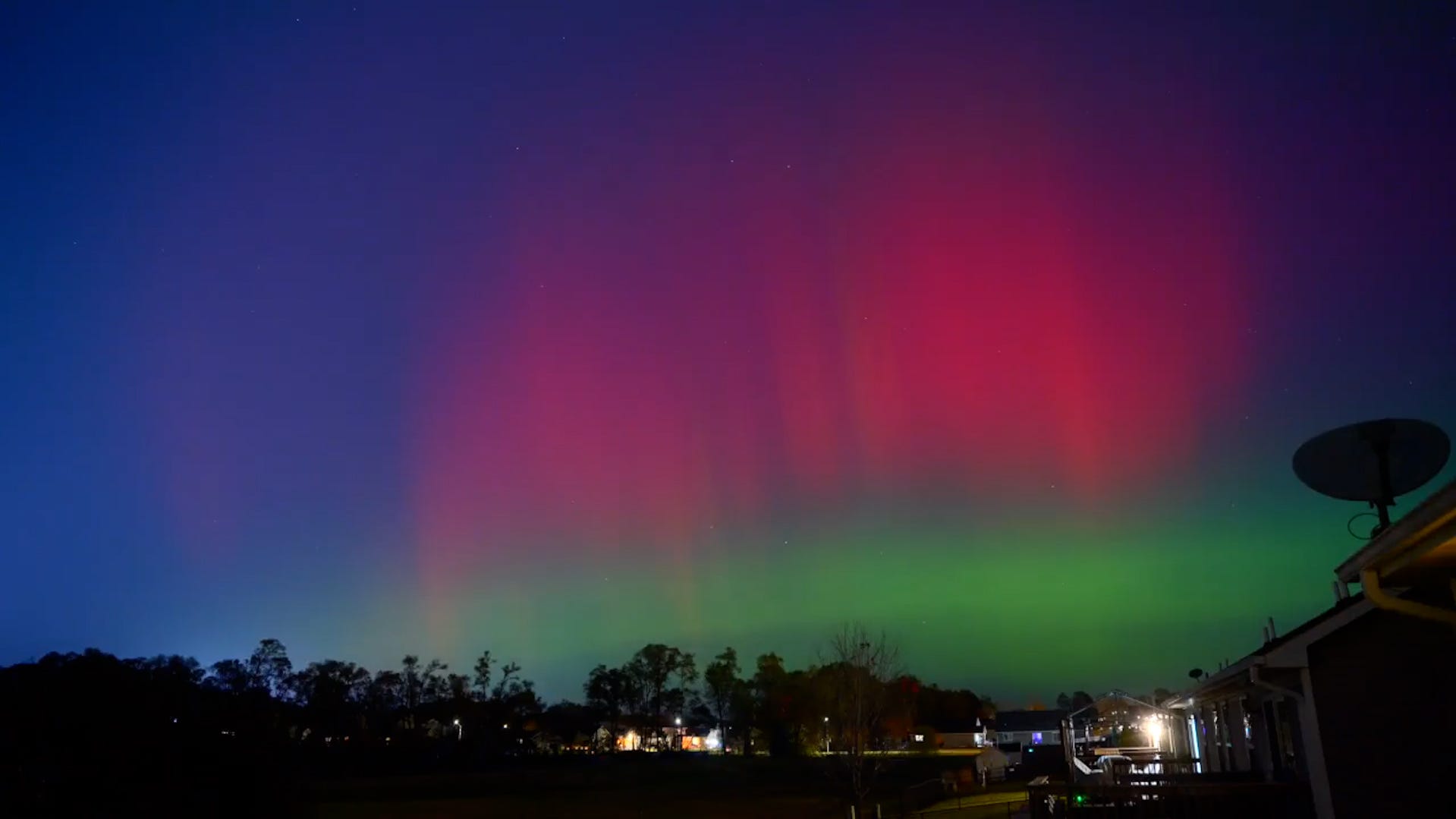

Northern Lights, northern lights that can be seen as far south as Texas and Florida
The powerful geomagnetic storm hit Earth's atmosphere, causing brilliant northern lights in several states.
The sun triggered an M8.1 solar flare over the weekend, prompting NASA to issue a rare G3 geomagnetic solar storm watch, with the effects of Sunday's “coronal full halo mass ejection” expected to cause strong geomagnetic storms this week – meaning a chance to see the northern lights in several states, including New Jersey.
According to the Space Weather Prediction Center, the NOAA forecast for Aurora Borealis by midday Tuesday, Dec. 9, is for a G3 geomagnetic storm that will emit solar particles at the K index of 7, which measures the strength of geomagnetic storms. A Kp value of 7 or higher on a scale above 9 means a bright and active aurora, which could be a rare experience with the visibility of the northern lights in lower states such as Pennsylvania, New York and New Jersey.
On December 6, the Sun triggered coronal mass ejections (CMEs), or bursts of energy, prompting a storm warning from meteorologists. It remains unclear what impact an “impulsive It could be another sign of Northern Lights in the coming days.
Here's what you should know about the Northern Lights forecast and when you might be able to see them near you.
Are the Northern Lights visible tonight?
The Aurora Borealis may not be visible in New Jersey tonight, but the Northern Lights could be seen in at least 15 states or more, including New Jersey, tomorrow evening, Tuesday, December 9, 2025. Weather, timing and orientation make it difficult to predict when and how strong the aurora borealis will be, NOAA says on its website, meaning it could easily move into lower states.
These states are within sight of a G3 storm:
- Maine
- Michigan
- Wisconsin
- Minnesota
- North Dakota
- South Dakota
- Montana
- Idaho
- Washington
- Alaska
However, a “strong” G3 storm with a Kp index of 6 or higher, which is in line with the current forecast, means that the following states are within possible line of sight of the Northern Lights:
- Pennsylvania
- new York
- Ohio
- Vermont
- Massachusetts
- New Hampshire
- Indiana
- Iowa
- Nebraska
- Wyoming
- Oregon
Can I see the northern lights tomorrow evening? Forecast for December 9th
Yes, many states will be able to view the Northern Lights on Tuesday, December 9, 2025 as long as it is dark outside as you cannot see the Northern Lights during the day. NOAA's Space Weather Prediction Center has issued a strong geomagnetic storm warning for December 9, 2025. This will be New Jersey's best chance to see the northern lights after a coronal mass ejection (CME) associated with an M8.1 flare on Dec. 6, which will reach Earth at noon Tuesday, NASA said.
Where can you check the Northern Lights forecast?
NOAA's Aurora Forecast Map produces real-time updates every 30 minutes. Here are some other sites you should check out:
How can you see the Northern Lights? Here are some tips cell phone settings
Typically, In New Jersey you cannot see the Northern Lights with the naked eyeso the best way to see the Northern Lights is with your cell phone.
Grab a coat, head outside, and make sure your camera is in “night mode” before pointing a steady hand at the sky and shooting away! A best practice is to make sure your phone's camera is in long exposure mode (dark mode) and use a tripod and timer to take the photo. Night mode tends to result in blurry photos if not taken with a steady hand.
Also, consider where you are: light pollution in NYC and urban areas will ruin your chances. Check out a local park without artificial lighting and be sure to check the local weather forecast. Clouds could disrupt the entire show.
Best Apps for Northern Lights Forecast
There are several iPhone and Samsung phone apps you can download to check the Northern Lights forecast for free. Here are some:
What is the Aurora Borealis? What causes the Northern Lights?
The northern lights, or aurora borealis, are created by electrically charged particles from the sun and gases in Earth's outer atmosphere, which are known for producing colorful bands of light in the night sky, often in shades of green, red or purple.
According to NASA, the Sun is currently at its maximum peak of the 11-year solar cycle, triggering electromagnetic activity. While we think of the famous spectacle as an impressive sight, these solar flares have potential impacts on power grids, satellite signals, radio communications, navigation and GPS, depending on their strength, according to NOAA.
Lori Comstock is a New Jersey-based journalist with the Mid-Atlantic Connect Team.