
CHAR Technologies Ltd., a leading provider of sustainable energy solutions and one of the companies featured in Environment Journal's Market Watch column, has announced the delivery of the first of two commercial high-temperature pyrolysis furnaces (HTP) to the Thorold Renewable Energy Facility. In addition, the conveyor belts for transporting raw materials will be installed this week. These milestones mark important points on the critical path to completing construction of Phase 1 and keeping the project on track for the start-up of commercial biocarbon production in January 2026.
CHAR Technologies is a Canadian cleantech company that uses its proprietary HTP to convert organic waste (including wood and agricultural residues) into renewable energy and valuable biocarbons (CleanFyre biochar, SulfaCHAR activated carbon) to decarbonize industries such as steelmaking and provide sustainable circular economy solutions and environmental services.
Phase 1 of the Thorold facility will convert up to 35,000 tonnes of wood waste per year into more than 5,000 tonnes of biocarbon per year, the majority of which is expected to be used locally by ArcelorMittal Dofasco, Canada's largest flat steel producer, under the previously announced 2023 offtake agreement to reduce fossil carbon in the steelmaking process.

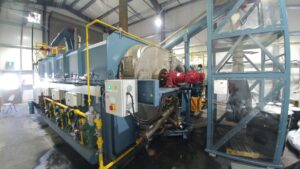
After completing the first phase, CHAR Technologies will proceed with construction of the second phase. These include the installation of a second HTP furnace to double production capacity, the addition of methanation equipment to convert synthetic gas to renewable natural gas (RNG), and the construction of the on-site natural gas pipeline entry point.
“It is a big moment for Thorold to have the oven on site and installed,” said Andrew White, CEO of CHAR Tech. “The team and our partners at BMI have progressed construction quickly and we are now in the final leg of Phase 1. With installation already underway, we are ready to begin first commercial operations in January.”
The Thorold Renewable Energy Facility is expected to be completed in 2026 and reach full commercial production capacity.
For more information click here.
Photo credit: CHAR Technologies