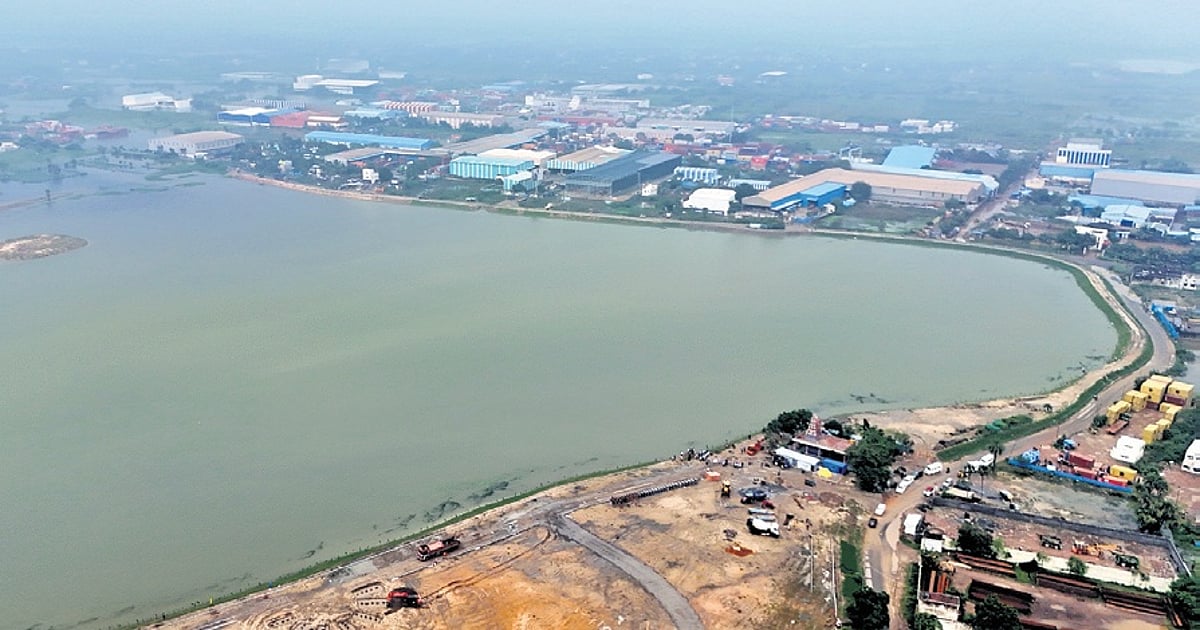
Previously, the lake remained neglected and full of invasive species, reducing its water-holding capacity to just 1.19 million cubic meters. After the renovation, the lake with an area of 134.89 acres and a catchment area of 13.4 km² now has a water holding capacity of 1.90 million cubic meters increased by around 70%.
With eight bodies of water connected to the lake, the restoration will help retain a greater amount of water, reducing the risk of flooding in surrounding areas. While lakes typically have steep slopes that require rocks to be piled to strengthen the dams, here about 7.2 million cubic meters of silt removed during restoration was used to strengthen the dams.
Landscaping work is also underway, using a combination of larger public green spaces and paving (2km) to create a walkway. Biofences were created with tree branches. Two biodiversity islands are planned.
The lake will serve as both a flood and drought protection system for the region, which is surrounded by extensive banana growing areas. In summer, farmers can use the stored water for irrigation, and improved storage will improve groundwater recharge, support agricultural activities and create recreational space for the local community, the official said.
In addition, it includes the installation of flood gates, creation of seating areas, a children's play zone, an outdoor lawn, dedicated rooms for butterfly and dragonfly diversity, a pollinator garden and learning spaces. The toilets are also built using recycled bricks made from fly ash.