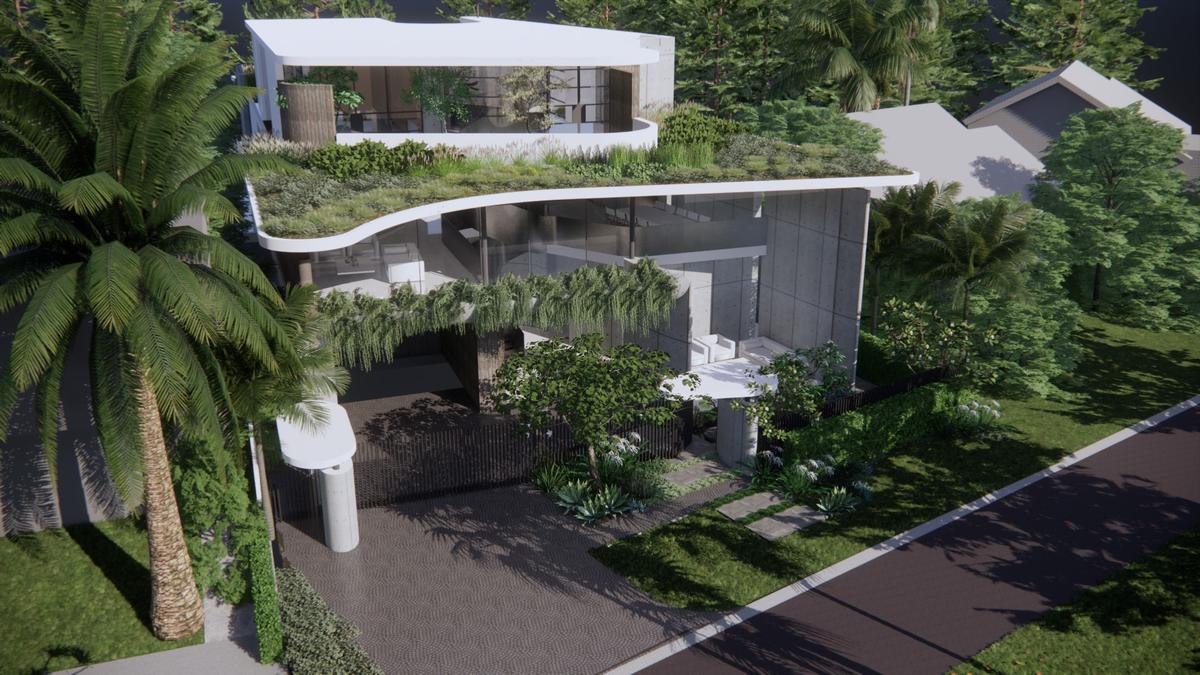
Picturesque roof gardens full of grasses, ornamental trees and vegetable patches are springing up in Perth's western suburbs as block sizes become smaller.
Australian Bureau of Statistics data released in 2022 shows the average lot size for new homes in Perth is just 399 square meters, the smallest in the country, but homes are not shrinking as quickly.
In fact, housing preference surveys show that most Australians will sacrifice the size of their outdoor space to avoid having to go without bedrooms.
As property prices continue to soar, the great Australian dream – a family-sized home with plenty of room for the kids to run around and play ball – is suffering a long, slow death.
Take a look at the current real estate listings and you'll quickly understand why.
Currently, a 227sqm property on Karella Street in Nedlands is asking from $825,000, while a 136sqm property on nearby Webster Street is asking $629,000 and up.
Back in October 2022, a 284m2 property on Vera Street in Cottesloe sold for $950,000 and a 267m2 property on Broome Street fetched $1.3 million in 2021.
The days of back gardens are numbered and landscaping experts point out that people need to redesign their outdoor spaces.
Tim Davies, managing director of TDL, believes demand for roof gardens will continue to grow as backyards become smaller.
His award-winning landscape design and construction company has designed many living roofs.
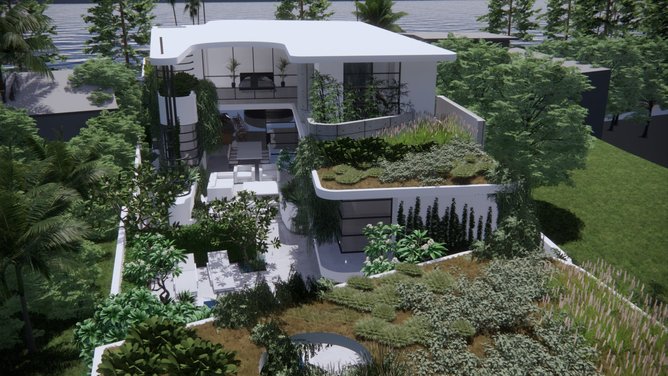
He recently designed a 500m² roof garden for a house at Wembley Stadium with native ground covers, low strapping plants and other native varieties that flow over the edges of the building to soften and ground it.
“The owners can step out onto the courtyard, but the majority of the space is purely visual, so when you're in the house you can look out onto these beautiful roof gardens that really connect the house with nature,” says Davies.
According to landscape architect Claire Greenhill, rooftop gardens offer many benefits.
They can soften the appearance of buildings, integrate the house into its surroundings and interact with the surrounding landscape.
The upper gardens can also serve as further living space to enjoy and provide an idyllic place to enjoy the views.
Whether used for recreation or not, a roof filled with green space creates privacy and lush views from inside the home while bringing nature and tranquility to multi-story homes.
Other benefits include improved insulation, lower energy costs and all the health benefits that come with connecting people and nature, according to Davies.
But rooftop gardens aren't cheap: expect to pay at least three times more than building a ground-floor garden.
“Just the access and provision of materials at this level impacts things,” explains Davies.
“Drainage is also very important, as is a light soil mix.
“Then if the roof garden is having problems with falls, you need to consider either adding fall protection to the outside of the roof or adding a harness point so that no one falls off the roof when maintenance is being done up there.”
Nevertheless, luxury homeowners value these green oases for their aesthetic, environmental and beneficial benefits.
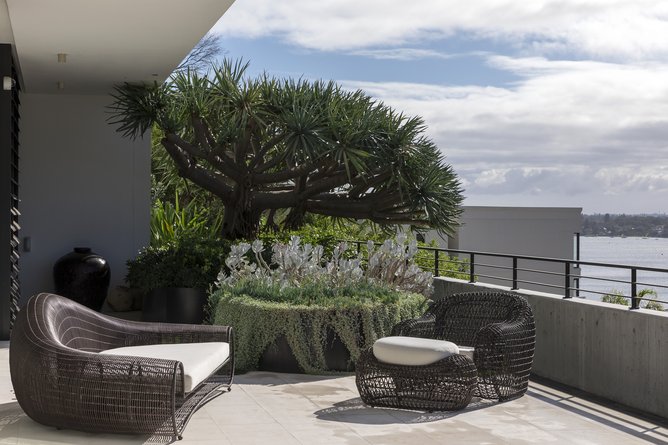
When designed well, rooftop gardens can feel like another world, says Davies.
“It creates a different experience than what happens on the ground,” he says.
“It can be very peaceful, especially when you add water features, which are a really nice way to cool down spaces and create a calming atmosphere.
“Installing outdoor fireplaces and outdoor kitchens is another popular option and if you don’t have enough floor space, you can grow your vegetables and herbs on your roof.
“Good lighting is also very important so that you can use the room at night.”
Davies recommends working with a landscape architect who will not only help you comply with municipal codes and safety requirements, but also prepare you for success with appropriate landscaping choices and plant palettes.
Greenhill says waterproofing, drainage mesh, geotech fabric, a light soil mix and drainage points are generally required to direct water away from the roof.
She explains that large pots and raised planters can be a good option for roofs, but warns that proper drainage is crucial so that your paving or patio isn't damaged or stained by water from the pots.
“If you're on the coast and your roof garden is being whipped by a salty sea breeze, you can't grow a very tender, soft, tender plant up there, but you could plant succulents or any native coastal plant – any plant with sturdy, leathery leaves that don't lose a lot of moisture,” she adds.
Davies recommends paying careful attention to materials and surfaces on roofs, too.
“When you're paving there, it's so important to think about drainage, so it can be good to have things like natural stone that sits on a base system so that water can flow, be absorbed and drained directly through the cracks in the pavement,” he explains.
“If there's ever a problem, it's easy to fix.
“Decking on a roof is another good option as water can flow straight through the roof into the drains and if problems arise, part of the decking can be pulled up and taken down again.
“When it comes to planting, grasses and relatively shallow-rooted varieties such as citrus trees and frangipani usually work well on roofs, while olives and bay trees are great for creating privacy.”
Trent Vivian, director of Vivian's Real Estate in Mosman Park, has found that roof gardens get mixed reactions from buyers.
They can create a wow factor, especially if they include an entertainment area or a vegetable garden.
But people don't want to be burdened with maintenance, which is why roof gardens need to be designed to be low-maintenance.
Davies says if your priority is low maintenance, just stick with native, Mediterranean and coastal plant varieties.
“In terms of maintaining Wembley House, for example, we also have an automatic irrigation system and harness points on the roof. When we go up there we can hook up to a harness, secure ourselves and then go through and service it.”
“We don’t find the maintenance to be particularly burdensome: it’s probably two hours per month.”
He admits that roof gardens can present some challenges, but adds that bare roofs offer the opportunity to create something truly special.
Tip:
Due to issues such as loading, waterproofing and material sourcing, it is easier to build roof gardens as part of a home's original construction rather than as a retrofit.
Five advantages of a roof garden:
- Creates and enlarges the view of greenery and connects the upper floors of houses with nature, which is associated with a variety of physical and mental health benefits.
- Softens architectural facades that are imposing or have a strong vertical presence from the street.
- Creates different zones for use by family members. Multi-generational living and children staying at home longer means it's great to have multiple 'garden rooms' that can be shared at the same time.
- Increases the total garden area of your home, which means more plants and trees. These create habitats for birds and are ideal for shading and cooling rooms.
- Green roofs can act as a protective thermal layer and help keep homes cool in the summer.
Remember:
Choose the right plant for the right location
Each roof garden will have a unique look and microclimate, and plant species should be selected based on factors such as:
- Aspect: Will it be in the sun or in the shade?
- Location: Remember that coastal areas struggle with salty winds and most rooftops in Perth experience strong winds.
- Environment and size: Remember that adjacent dark areas radiate heat and small garden beds dry out more quickly than large ones.
- Soil depth: Shallow roof gardens are only suitable for low-growing species with shallow roots.
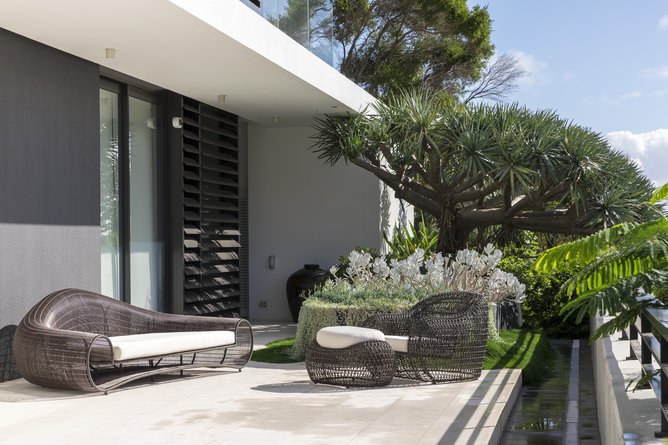
- Suitable trees: Hardy Mediterranean species, native plants and succulents are generally good choices. Olives, frangipanis, dracaenas and citrus fruits work well for roofs.
Source: Claire Greenhill, landscape architect at TDL.