Across the United States, city leaders face a common challenge: How to build neighborhoods that can withstand the increasing force of severe weather? From hurricanes along the Gulf Coast to hailstorms and tornadoes inland, the frequency and cost of natural disasters are increasing. Flood barriers, microgrids and green roofs are part of the equation, but increasingly so is the roof over every home.
At a time when communities face stronger storms, rising insurance premiums and infrastructure designed for a milder past, resilience has become a critical benchmark for a “smart” city and neighborhood. According to the US Chamber of Commerce, Every dollar invested in storm preparedness can save up to $7 in disaster recovery. This makes proactive infrastructure, especially the humble home roof, one of the smartest investments homeowners can make.
A science-based solution to urban vulnerability
The FORTIFIED™ Developed by the Insurance Institute for Business & Home Safety (IBHS), the standard is becoming a practical framework for local governments and homeowners to reduce losses and accelerate recovery from severe weather events. By establishing measurable, science-based performance requirements for roofing systems, FORTIFIED™ is transforming the way homes, particularly in urban areas, prepare for wind, rain and hail on a large scale.
In 2025 GAFNorth America's largest roofing and waterproofing manufacturer, announced a unique alliance with IBHS to make FORTIFIED™ roofing more accessible nationwide. The FORTIFIED™ standard uses decades of research to establish strict, above-code performance criteria for roofs designed to withstand hurricane-force winds, hail and heavy rain. Together, this groundbreaking collaboration makes FORTIFIED™ roofing and related products more widely available and helps homeowners strengthen their defenses against the elements.
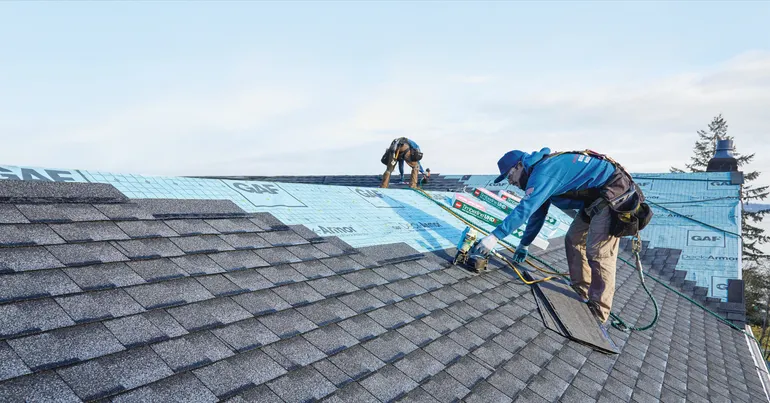
The FORTIFIED™ approach addresses one of the most vulnerable points on a home: the roof. By securing roof decks, reinforcing edges and adding secondary water barriers, a FORTIFIED™ roof reduces the risk of tears and leaks that often result in catastrophic damage. Independent verification ensures that each installation meets IBHS performance standards above.
“A stronger roof can prevent damage from a small repair to major losses.” “Science shows that resilience works,” says Fred Malik, executive director of FORTIFIED at IBHS. “And the research clearly shows that resilience works.”
The data proves it. After Hurricane Sally hit Alabama In 2020, FORTIFIED™ homes had 73% fewer insurance claims and 20% lower claim severity than non-FOTIFIED™ homes. If every home in the storm's path met the FORTIFIED™ standard, Researchers appreciate $140 million in damage could have been avoided.
These findings have helped drive adoption in both coastal and inland regions, particularly in communities where insurance availability and affordability have become pressing policy issues. For insurers and communities struggling with storm-related risks, these numbers mean more than just savings; They are proof that resilience can be measured, scaled and replicated.
Expanding access through training and technology
A key barrier to scaling resilience is workforce readiness. As part of its collaboration with IBHS, GAF trains roofers in FORTIFIED™ installation as part of their Center for the Advancement of Roofing Excellence (CARE) program.
To date, more than 1,000 roofing professionals from over 500 companies have been trained to become FORTIFIED™ certified roofing contractors, creating a nationwide network of qualified contractors capable of delivering superior performance in diverse markets. These programs not only strengthen community preparedness, but also provide opportunities for skilled tradespeople to participate in strengthening severe weather resiliency across the country.
“Contractors who go through this program are invested in the safety of their communities,” said Mike Thomas, director of external learning and development, Storm Restoration at GAF. “Through this training and product offering, we are raising the bar on roofing standards nationwide and expanding access to IBHS’ FORTIFIED solutions, which deliver roofs that are stronger and more resilient to inclement weather.”
Why it matters for smart cities
For planners and policymakers, FORTIFIED™ offers a model for integrating resilience into existing housing and infrastructure programs. States like Alabama, Louisiana and Oklahoma now provide grants or insurance incentives for FORTIFIED™ construction, a policy lever other cities can use to bolster storm preparedness. Cities such as New Orleans, LA and Birmingham, AL also use local and CDBG funds to supplement state grants for families in need.
“Smarter cities are those that plan for the storms of the future, not just recover from the storms of the past,” says Fred Malik, managing director of FORTIFIED at IBHS. “Roof resilience may not sound high-tech, but it is one of the most cost-effective tools available to cities to protect their populations and budgets.”
Looking ahead
As urban resilience planning expands to include energy systems, housing stock and emergency response, the GAF-IBHS alliance illustrates a simple truth: resilience starts with the basics. When roofs hold, families stay, businesses stay open, insurers stabilize, and neighborhoods recover faster, making the entire city stronger.
For more information about the FORTIFIED™ roofing program and GAF products, warranty and training, visit www.GAF.com/FORTIFIED.