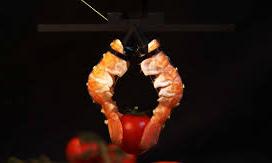
Engineers have developed a new class of biohybrid robots by converting discarded lobster shells into functional robotic components capable of lifting objects, grasping delicate objects and swimming through water.
The work shows how food waste can become a resource for environmentally friendly robotics.
Biohybrid robots combine biological materials with technical systems.
In this case, engineers used leftover exoskeletons from lobsters. These shells are inherently composed of rigid plates connected by flexible membranes that allow movement and provide stability. The team made the shells softer by adding a soft elastomer to them. They then attached small motors and covered the modified housings with silicone to increase durability.
According to the research team, the lobster tail segments were converted into robotic joints, grasping fingers and swimming fins.
In laboratory tests, a single modified shell could lift about 500 grams. When two shell segments were used together, the gripper could handle items ranging from pens to tomatoes. The engineers also built a small swimming robot powered by clam-based fins. The fins flapped in the water, propelling the robot at a speed of about 11 centimeters per second.
The researchers say the use of waste shells gives the design an environmental advantage. The shells provide structure while the synthetic components can be removed and reused, supporting a circular approach to robotics. They describe the work as a proof of concept showing that discarded biological material can be part of future robot design.
Before this technology can be used outside the laboratory, a number of challenges still need to be overcome.
Each lobster shell is slightly different, meaning two grasping fingers from different tails bend unevenly. This makes precise control difficult and limits performance consistency. The team notes that these variations present a major hurdle to scaling the technology.
Still, the study points to a new direction for robotics by turning dead biological matter into useful machine parts.