Anchorage residents fear heavy snow could crush their roofs.
These are the preliminary results of a recent survey conducted by the Institute for Social and Economic Research at the University of Alaska Anchorage.
“Over 70% of respondents expressed concerns,” said Associate Professor Jennifer Schmidt, who conducted the survey as part of a larger collaborative project between the University of Alaska and other research institutions, including the National Science Foundation.
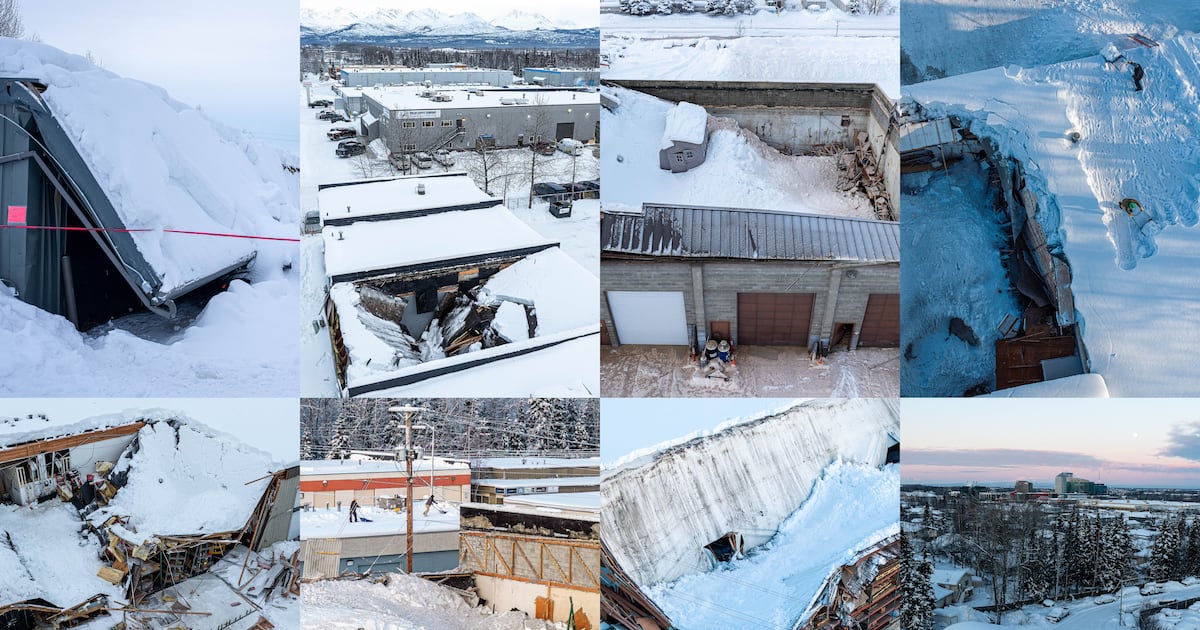
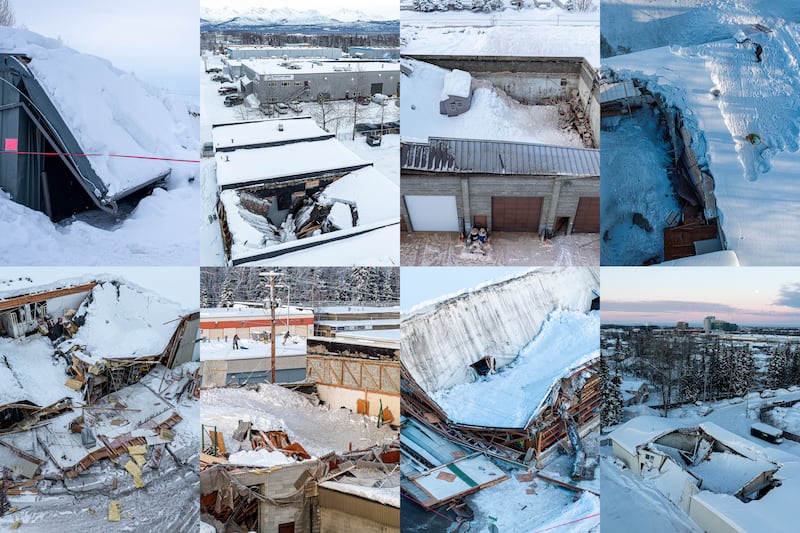
Schmidt said the research was inspired by recent heavy snowfall in Anchorage and the public response to it. Southcentral Alaska experienced heavy snowfall early in the season in the winter of 2022-23 and again the next year. As rainfall accumulated over the months, the roofs of some commercial buildings built with a special long-span truss design began to buckle. Over two winters in Anchorage, more than two dozen roofs collapsed. City building officials worked to warn commercial property owners who may be at risk and provide the public with guidance on what to look for if there may be a roof failure.
Even though the danger primarily affects commercial buildings with large flat roofs, many people are concerned about their homes and residential buildings. The demand for roof shoveling work skyrocketed. Other homeowners climbed up to do it themselves. The do-it-yourself approach not only runs the risk of accidentally damaging the roof, often scraping shingles with a shovel or blocking vents, but injuries also occur regularly.
That was one of the reasons that inspired Schmidt to look into the topic.
“When I lived here, I saw a lot of people shoveling their roofs. I shoveled my roof,” she said.
And she got hurt. She injured her back so badly while clearing snow from the roof of her house that it took a year to fully heal.
How many others had similar stories, Schmidt wondered, and was there better data to make informed decisions about whether any of this was necessary?
“You have to weigh the benefits and negative consequences,” she said.
Researchers sent surveys to “the entire community,” she said, and received 421 responses, “which is great, a lot more than we wanted to achieve.”
In addition to the 70% of respondents who said they were concerned about a heavy snow load on their home, Schmidt learned that 54% of them had gone on their roof. Another 27% said they had hired someone to clear snow from their roof.
Respondents said they wanted clear criteria for when to take action to manage overhead snow loads. Half of the people who responded to the survey said they didn't know whether insurance would cover damage in the event of a roof collapse.
“Concern among residents is high, but that doesn't mean they're at risk. I don't want to say buildings in Anchorage are at risk of collapse. We're assessing the perception of concern,” Schmidt said.
Researchers are also surveying local businesses on the issue, but Schmidt said they have been less responsive. During heavy snow years, private companies have been “very proactive” about clearing their roofs, in part because they were the ones that collapsed, she said. But there is also the risk of liability or loss of customers if a company is associated with a risky roof. Or, as the researchers discovered, the company simply rents the space.
“We're finding that a lot of companies don't really control the ownership of their roofs. There are a lot of property management groups in the community,” Schmidt said.
There are also no great tools to help individuals or local governments assess the relative risk of collapse, Schmidt said. Calculating snow weight is different from measuring snow depth, which is commonly used in discussions of snow loads. Rain or ice accumulating in the snowpack, for example, does not add much to its depth, but rather makes it heavier. A foot of thick, wet snow puts much more pressure on a home than 3 feet of fluffy, dry snow that you can clear with a leaf blower. And while there are sophisticated sensors for measuring the so-called snow-water equivalent, they are primarily used in mountainous areas and not in the Anchorage Bowl, where most residential and commercial development is located.
“The urban environment was not the focus when placing these measures,” said Schmidt.
Better data, she said, would help people assess whether their roof is in trouble and not spend unnecessary money on clearance or risk injury.
“I hope we provide information that will help the Anchorage community, residents and businesses make more informed decisions about whether they need to be concerned about snow loads on their roofs and what they can do to safely reduce snow loads,” Schmidt said.
Schmidt will present the preliminary survey results next Wednesday, Dec. 10, in a free webinar hosted by the University of Alaska Fairbanks Cooperative Extension Service.