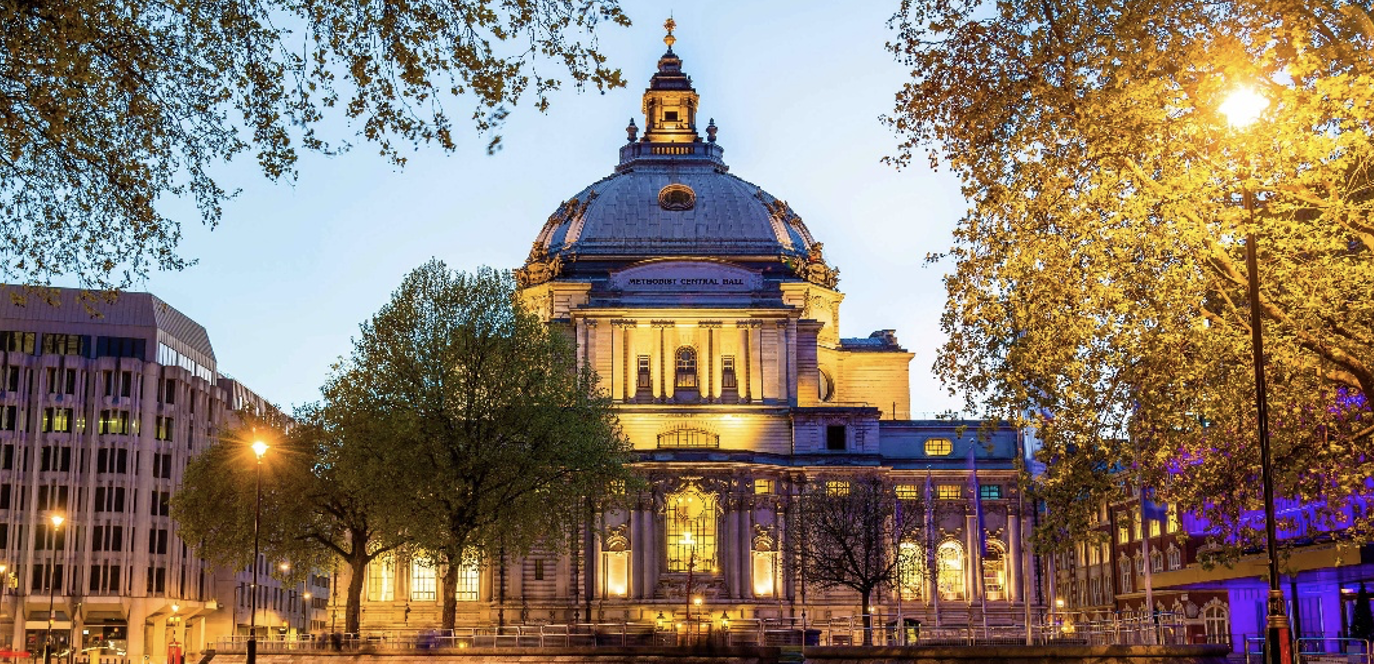
Sarah Franczak, Chief Operating Officer at Central Hall Westminster, reflects on how industry collaboration and community engagement shape Westminster's position at the heart of the UK events landscape.
Westminster has always been a place where people come together to create change. It is a space defined by conversation, collaboration and influence. At the heart of Britain's political, cultural and business life, it continues to shape not only national decisions but also the way our industry thinks about connection and community.
Today, as the events industry rapidly evolves, Westminster's role as an iconic hub of experiences remains as important as ever. Recent data from Westminster Venue Collection shows a 27% increase in event inquiries this year – a reminder that the desire to meet in person and share ideas is stronger than ever.
The latest MIA Insights (November 2025) also highlights the industry's current challenge: market demand was the main factor in sales development, yet two thirds of companies remain confident that they will achieve their overall goals for 2025. This shows the resilience and agility of the industry to adapt and evolve. At Westminster, this adaptability is evident in how venues and partners work together to deliver meaningful, experiential events.
Why Westminster still matters
In a time when technology enables hybrid and remote meetings, the question of place has taken on new meaning. But what Westminster offers cannot be replicated online: a sense of closeness to heritage, leadership and purpose.
For organizers, this environment offers a professional network based on collaboration and expertise. It is home to a diverse mix of venues, suppliers and associations that drive the UK events industry. From international conferences to creative performances, the area offers both the infrastructure and community to help events deliver measurable results and lasting connections.
Adapt to changes
Central Hall Westminster's history is similar to Westminster's ability to evolve. The Methodist Central Hall was built in 1912 as a Methodist Church house of worship and designed as a meeting place for social reformers and community leaders. Our building has continually adapted to the times – from hosting the opening session of the United Nations General Assembly in 1946 to evolving into a state-of-the-art venue for modern audiences.
Our latest development, the Susanna Wesley, is part of this ongoing story and shows how Westminster venues are expanding to meet changing expectations for flexibility, capacity and sustainability. Each new space represents an investment in keeping Westminster relevant to modern audiences while honoring its historic roots.
The MIA Insights also show how the industry is responding to changing customer needs. Many companies are adopting flexible staffing models, diversifying their offerings and strengthening customer communications to maintain service levels and control costs. As corporate meetings increase, 40% of respondents reported reduced client budgets, showing the importance of educating clients about the value of high-quality, sustainable events.
At Central Hall Westminster we apply these insights by balancing innovation with tradition, ensuring our spaces remain relevant, flexible and valuable for any type of event.
The future of events in Westminster
As the events industry faces changing audience behavior, shorter lead times, higher costs and other challenges, collaboration within the Westminster community will be critical. Venues, local businesses and event professionals must work together to ensure the historic site remains accessible and inclusive.
Our role as Westminster's largest heritage venue is to support innovation while preserving the heritage that gives Westminster its identity. For us, that means investing in our facilities and sustainability initiatives, nurturing the skills of our team, and staying connected to the broader conversations that shape our industry.
Westminster's influence remains strong as it continues to evolve and is shaped by the people, places and ideas that drive the events industry forward. As we look to the future, its role as a hub for creativity, collaboration and change remains crucial.