A winter garden is a stark contrast to the vibrant leaves and buds that sprout from stems and soil each spring. Bare branches and the fresh brown foliage of perennials that have died for the season make the garden appear lifeless, although there is still a lot going on behind the scenes as the plants prepare for spring. During the winter, many plants go dormant, storing energy for the next season, and it's a good time to prune them before new growth begins. Here are the plants you should prune in the winter to keep your garden healthy in the spring.
apple tree
Getty Images
Apple (Malus domestica) and many other fruit trees benefit from pruning while they are dormant from late winter to early spring. Since there are no leaves on the apple trees during this period, their structure is clearly visible for shaping and removing dead or damaged wood. Removing unnecessary branches allows the tree to focus its energy on new growth when spring arrives. Pruning during dormancy also prevents tree sap from “bleeding” or leaking, which can attract pests and lead to disease at other times of the year.
Japanese maple
Getty Images
While Japanese maples (Maple palmate) do not require excessive pruning. Winter is the best time to see the structure of the tree and any dead, damaged or crossing branches that need to be removed. Bleeding is also minimal during this time. Because the tree is dormant, pruning during this time places less stress on it.
Butterfly bush
Jacky Parker Photography/Getty Images
While some gardeners prune butterfly bushes (Buddleja davidii) in autumn, the best time for this is winter. This shrub blooms on new wood that grows back in the spring, so anything you cut in the winter won't affect next season's blooms. Cut it back by a third to encourage plenty of new growth in the spring. If you need to manage the size of a very large plant, you can cut it back to the ground.
Rose of Sharon
Getty Images
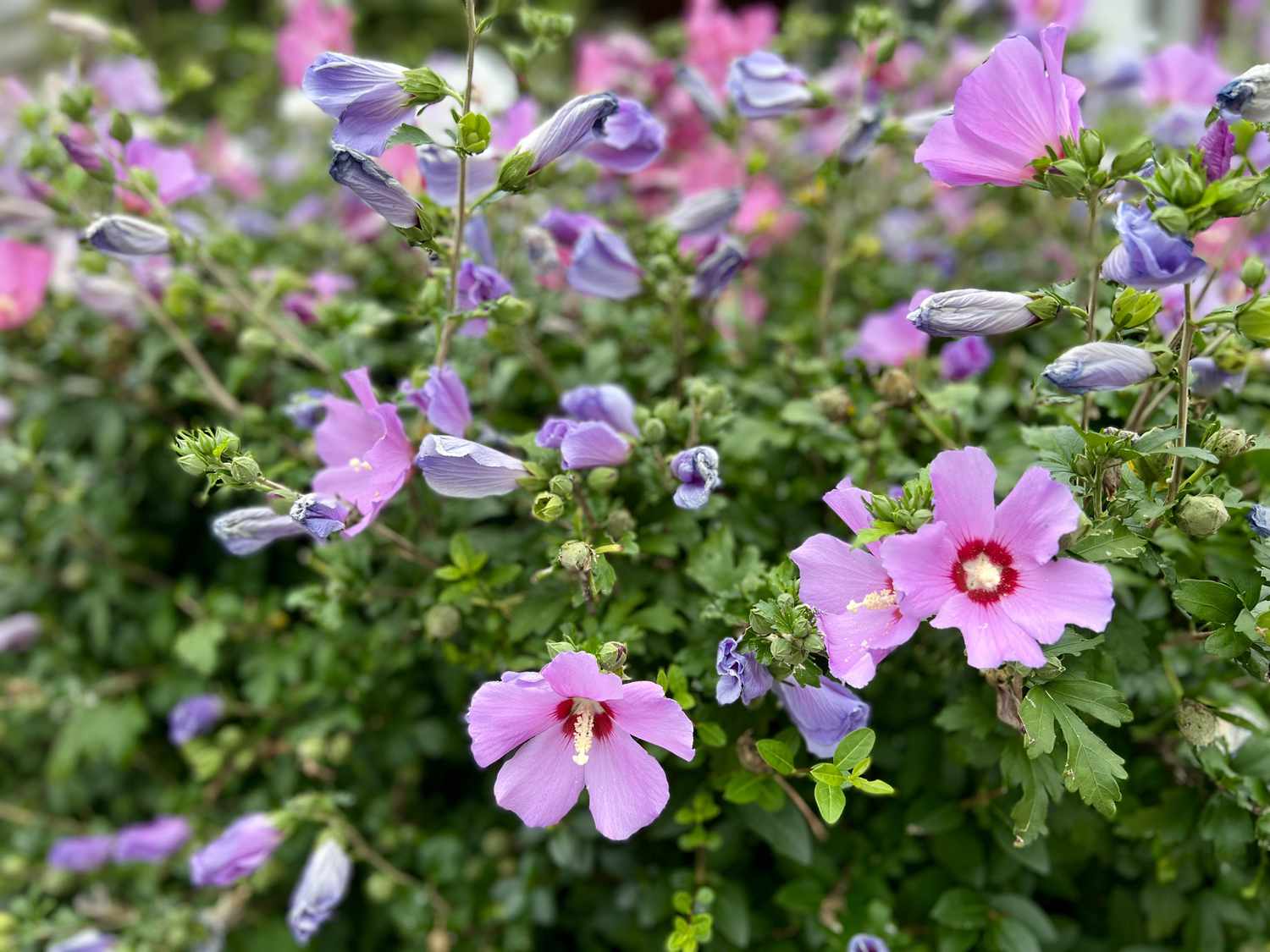
Rose of Sharon (Syrian hibiscus) is a hardy hibiscus that can thrive in colder regions than its more tropical relatives. From autumn to early spring it goes dormant and loses its foliage. If you cut later, there is a risk that flower buds that have formed will be removed and the number of flowers will be reduced. Prune the oldest stems to encourage new, younger growth. Make cuts at a 45-degree angle across the outward-facing nodes to create the best shape as the shrub grows.
hydrangea
Getty Images
Not all hydrangea species should be pruned in winter, but it is the best time to cut back panicles (Hydrangea paniculata) and smooth (H. arborescens) varieties. These grow on new wood from the current season, so you don't remove flower buds when pruning in the winter. Cut smooth hydrangeas back about 12 inches (30 cm.) above the ground and cut off a third of the height of the panicle hydrangea branches.
Wisteria
Pruning wisteria (Wisteria frutescens) while the vine is dormant to trim shoots and thin out crowded branches. In winter, the wisteria vine has no leaves and it is easier to see its structure to shape and remove dead or damaged branches. Aggressive wisteria species can be pruned after flowering and again in winter to control their spread.
Holly
Getty Images
Winter is the best time to heavily prune holly bushes (ilex spp.). Removing dead and damaged branches while the shrub is dormant encourages new growth before the growing season. At other times of the year, such as late spring and early summer, light pruning can be done for shaping and maintenance. Avoid pruning in late summer or fall as cold weather can damage any new growth.
Abelia
This easy-care plant is often planted along house foundations. Abelia (Abelia x grandiflora) tolerates drought and produces small, fragrant flowers from spring until well into autumn. Because the plant can become leggy and overgrown, pruning is necessary to remove dead branches, improve air circulation throughout the plant, and promote fuller growth. Major pruning can be done in winter before new growth begins and will not jeopardize the season's blooms.